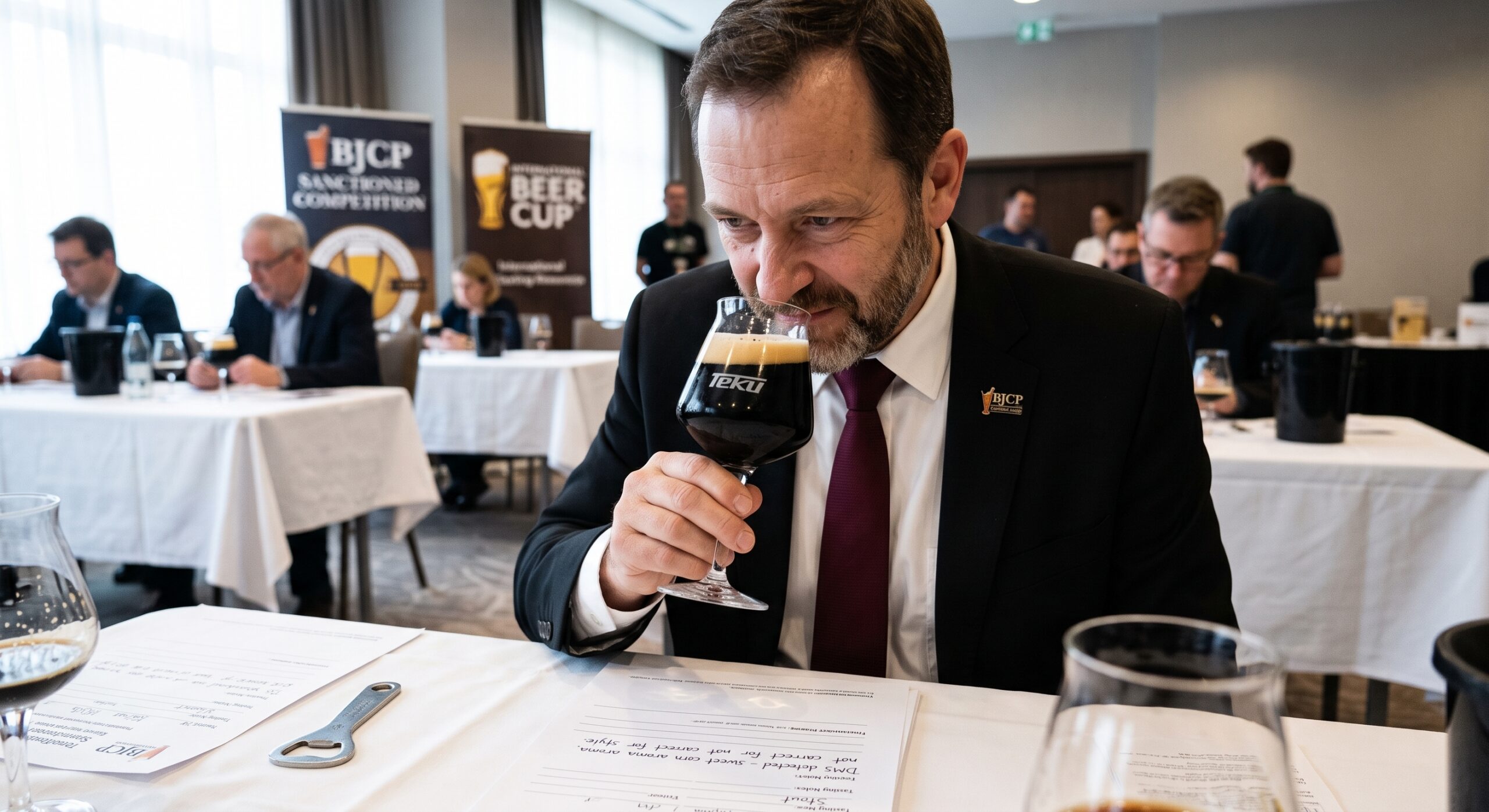
For the professional brewer, consistency and flavor integrity are paramount. One of the most common and insidious threats to beer quality, often overlooked by beginners, lies hidden in municipal tap water: chlorine and chloramines. These sanitizing agents, while essential for public health, are detrimental to beer, leading to the dreaded “medicinal” or “band-aid” off-flavor known as chlorophenol. Mastering brewing water treatment is a critical skill, and this article will provide a rigorous technical guide to effectively neutralizing these compounds using potassium metabisulfite.
The Chemistry of Chlorophenol Off-Flavor
The formation of chlorophenols in beer is a direct consequence of the reaction between chlorine or chloramines present in brewing water and phenolic compounds derived from malt. These phenolic compounds, predominantly polyphenols and certain amino acid derivatives, are naturally extracted during mashing.
Chlorine (Cl2) in its free form is highly reactive. When it encounters phenolic structures, particularly those with hydroxyl groups on an aromatic ring, it undergoes an electrophilic substitution reaction. The chlorine atom replaces a hydrogen atom on the aromatic ring, typically at positions ortho or para to an activating group. A common problematic compound is 2,6-dichlorophenol, formed from the chlorination of phenols. This compound has an extremely low sensory threshold, often detectable in the low parts per billion (ppb) range, making even trace amounts of chlorine problematic.
Chloramines, such as monochloramine (NH2Cl), dichloramine (NHCl2), and trichloramine (NCl3), are formed when ammonia is added to chlorinated water. They are more stable and less reactive than free chlorine but still pose a significant threat. While their reaction kinetics with phenols are slower, they ultimately lead to the same chlorophenolic off-flavors, often requiring longer contact times to manifest. The stability of chloramines also means they are not easily removed by simple boiling, unlike free chlorine.
The resulting chlorophenol off-flavors are described as medicinal, plastic, band-aid, antiseptic, or even smoky. This is a flaw that can completely ruin a batch, and its prevention is a fundamental aspect of quality-driven brewing.
Limitations of Activated Carbon Filtration
Activated carbon filtration is a widely recognized method for removing various organic and inorganic contaminants from water, including chlorine. Its efficacy stems from its highly porous structure, which provides a vast surface area for adsorption. Free chlorine (Cl2) is effectively removed through catalytic decomposition and adsorption by activated carbon, reacting to form chloride ions (Cl–) and water.
However, activated carbon’s performance against chloramines is significantly less robust. While activated carbon can break the chlorine-nitrogen bond in chloramines, this process requires considerably longer contact times, larger carbon beds, and slower flow rates compared to free chlorine removal. Furthermore, the capacity of activated carbon to remove chloramines is finite, and it eventually becomes saturated, leading to “breakthrough” where chloramines begin to pass through the filter unaffected. Regular backwashing and eventual replacement of the carbon media are necessary, which adds to operational costs and maintenance complexity, especially for larger brewing volumes.
For commercial breweries or even serious homebrewers seeking absolute certainty and ease of use, relying solely on activated carbon for chloramine removal can be inconsistent and impractical. This is where chemical neutralization with metabisulfite presents a superior, more predictable, and often more cost-effective solution.
Potassium Metabisulfite (Campden) Dosing: The Science and the Math
Potassium metabisulfite (K2S2O5), commonly available as Campden tablets, is a powerful and efficient reducing agent. When dissolved in water, it hydrolyzes to form bisulfite ions (HSO3–) and sulfur dioxide (SO2). It is the sulfur dioxide that reacts with chlorine and chloramines, effectively neutralizing them.
The key reactions are as follows:
- For Free Chlorine:
Cl2 + HSO3– + H2O → 2Cl– + SO42- + 3H+
(Or simplified: Cl2 + SO2 + 2H2O → 2HCl + H2SO4) - For Monochloramine:
NH2Cl + HSO3– + H2O → Cl– + SO42- + NH4+ + H+
(Or simplified: NH2Cl + SO2 + 2H2O → HCl + H2SO4 + NH3)
In both cases, chlorine atoms are reduced to benign chloride ions (Cl–), and the sulfur dioxide is oxidized to sulfate (SO42-). The byproducts are typically negligible in terms of their impact on beer flavor or water chemistry at typical dosing rates.
Dosing Calculation:
While precise stoichiometric calculations can be performed, a practical approach for brewing ensures an adequate excess for complete removal without introducing off-flavors from excessive metabisulfite. One Campden tablet typically weighs 0.44 grams (440 mg).
A widely accepted guideline is to use 1/4 Campden tablet (approximately 0.11g or 110 mg) per 5 gallons (18.9 liters) of brewing water. This dose is sufficient to neutralize up to 3-4 ppm (mg/L) of total chlorine (free chlorine + chloramines), which covers the vast majority of municipal water supplies.
Let’s verify this with a typical scenario:
- Assume municipal water has 2 ppm (mg/L) total chlorine.
- For 5 gallons (18.9 liters) of water, you need to neutralize: 18.9 L * 2 mg/L = 37.8 mg of total chlorine.
- The reaction ratio is approximately 1 part SO2 to 1 part Cl2 or NH2Cl. Since K2S2O5 releases SO2, and considering its molecular weight relative to SO2, roughly 1 mg of K2S2O5 neutralizes about 0.6 mg of chlorine.
- Thus, to neutralize 37.8 mg of chlorine, you would theoretically need: 37.8 mg / 0.6 = 63 mg of K2S2O5.
- Our recommended dose of 1/4 tablet (110 mg) provides a comfortable excess, ensuring complete neutralization.
While excess sulfite can theoretically introduce sulfury notes, the small quantities used in this application make this highly improbable. The slight acidity produced (sulfuric acid) is also negligible in the context of typical mash pH adjustments.
Step-by-Step Mash and Sparge Water Preparation
Implementing metabisulfite treatment is straightforward and should be integrated into your standard brewing water preparation routine:
- Obtain Your Water Report: Before any treatment, always know your water’s baseline. A recent municipal water report is essential for understanding initial mineral content and typical chlorine/chloramine levels.
- Accurately Measure Water Volumes: Determine the precise volumes of both mash and sparge water required for your brew. Accurate measurement ensures correct dosing.
- Calculate Metabisulfite Dose: Using the guideline of 1/4 Campden tablet (or 0.11g of powder) per 5 gallons (18.9 liters), calculate the total amount needed for your combined mash and sparge water volumes.
- Pre-dissolve the Metabisulfite: Crush the Campden tablet(s) into a fine powder (if using tablets) and dissolve it in a small amount (e.g., 100-200 ml) of cold water. This ensures even distribution and quick dissolution once added to the main water volume.
- Add to Cold Water: Add the dissolved metabisulfite solution to your total volume of cold brewing water (mash and sparge combined, or treated separately if preferred). It’s crucial to treat the water before heating, as heating can cause some chloramines to become more persistent or to react prematurely.
- Stir Thoroughly: Agitate the water vigorously for a minute or two to ensure the metabisulfite is evenly distributed throughout the entire volume.
- Allow Reaction Time: Let the treated water sit for at least 5-10 minutes. This allows sufficient time for the chemical reactions to fully complete, ensuring all chlorine and chloramines are neutralized.
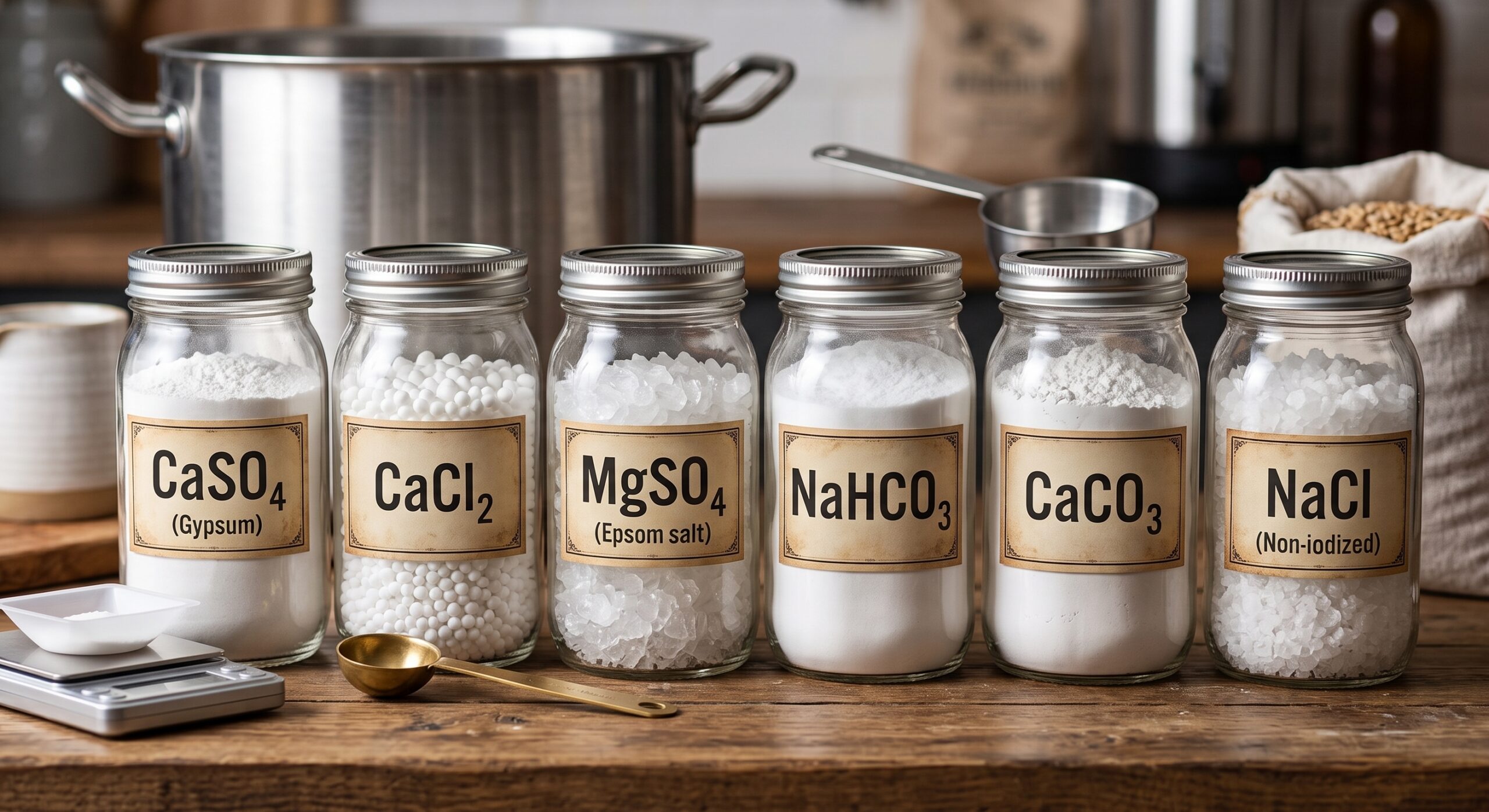
- Proceed with Other Adjustments: After the waiting period, you can proceed with any other desired water adjustments, such as adding brewing salts (e.g., gypsum, calcium chloride) or making pH adjustments (e.g., lactic acid, phosphoric acid).
Comparative Table of Chlorine/Chloramine Removal Methods
To summarize the options for removing these critical off-flavor precursors, consider the following:
| Method | Target Compounds | Effectiveness | Practicality for Homebrewer | Considerations |
|---|---|---|---|---|
| Boiling | Free Chlorine | High (for free chlorine) | Limited (energy, time) | Ineffective for chloramines; introduces dissolved oxygen |
| Activated Carbon | Free Chlorine (high), Chloramines (moderate) | Good (chlorine), Variable (chloramines) | Requires filter system, maintenance | Flow rate dependent, breakthrough risk, capacity limitations |
| Potassium Metabisulfite (Campden) | Free Chlorine & Chloramines | Excellent & Consistent | Very High (simple, inexpensive) | Minimal byproducts (chloride, sulfate), slight pH drop (negligible) |
| Ascorbic Acid (Vitamin C) | Free Chlorine & Chloramines | Excellent | Good (powder or tablets) | More expensive than metabisulfite, can slightly lower pH; potential for slight tartness if overdosed |
For most brewers, potassium metabisulfite offers the optimal balance of effectiveness, ease of use, and cost-efficiency for reliably eliminating chlorine and chloramines from brewing water.
By understanding the underlying chemistry and applying these precise methods, you ensure that your brewing water is a neutral canvas, allowing the true flavors of your malt, hops, and yeast to shine through without the interference of off-flavors. Consistent and precise water treatment is a hallmark of truly professional brewing.
Want to master process control, advanced formulation, and brewing science without secrets? Find all the fundamentals, water profiles, and fermentation guides in the book From Homebrewer to Gold, available on Amazon.